


Online School Versus Microschool: Which Fits?

A child may be completing assignments, earning passing grades, and still be struggling. Perhaps mornings have become a battle. Perhaps your child rarely speaks in class, shuts down after video lessons, or needs far more adult support than an online program can provide. When parents compare online school versus microschool, the real question is rarely just where learning happens. It is whether the environment helps their child feel safe, known, challenged, and able to grow.
Both options can be meaningful alternatives to a crowded traditional classroom. But they solve different problems. For neurodivergent students especially, the distinction between learning independently through a screen and learning within a small, responsive community can shape everything from daily regulation to long-term confidence.
Online School Versus Microschool: The Core Difference
Online school is typically built around digital delivery. Students access lessons, assignments, videos, live classes, and assessments through an online platform. Depending on the program, instruction may be self-paced, scheduled, teacher-led, or largely independent. It can offer flexibility that many families genuinely need.
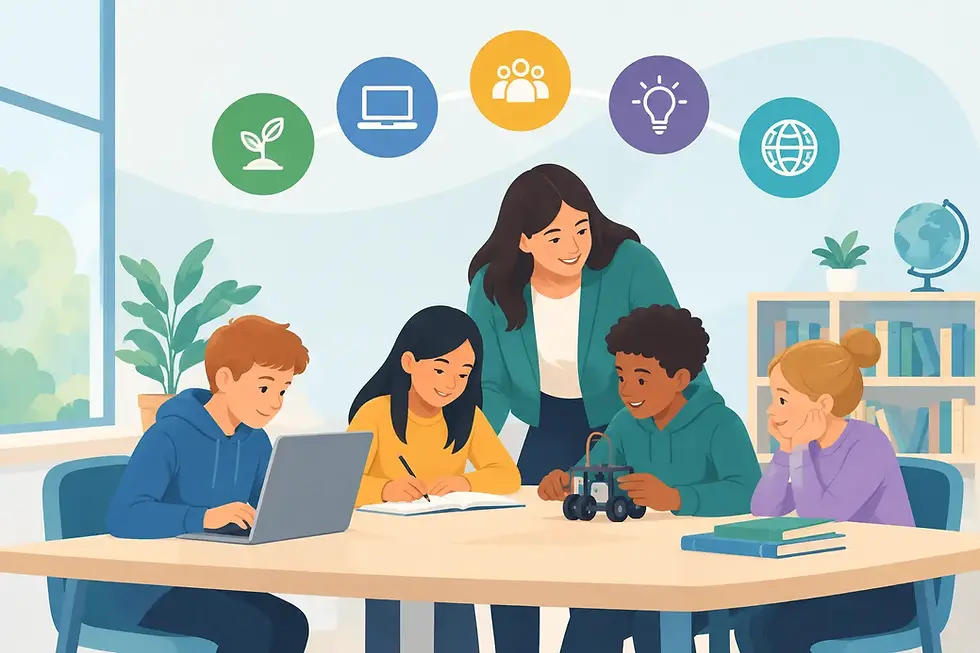
A microschool is a small, in-person learning environment designed around close relationships and individualized instruction. At ReThink Microschools, classes are capped at eight students, allowing educators to understand how each learner communicates, engages, regulates, and makes academic progress. The goal is not simply a smaller version of conventional school. It is a different model: structured, personalized, and built for students who benefit from being truly seen.
Online learning asks a student to manage much of the learning environment independently. A microschool takes greater responsibility for shaping that environment around the student. That difference matters when executive functioning, attention, sensory needs, anxiety, communication differences, or social-emotional challenges affect access to learning.
When Online School Can Be a Good Fit
Online school can be a strong choice for students who are self-directed, comfortable with technology, and able to sustain attention without frequent in-person prompting. It may work well for a student with a demanding extracurricular schedule, a health condition that makes daily attendance difficult, or a clear preference for working independently at home.
Some students also appreciate the ability to pause a lesson, work at their own pace, or avoid the sensory demands of a large campus. For families in rural areas or those without access to a suitable local program, virtual school can provide curriculum options that would otherwise be unavailable.
Still, flexibility is only helpful when a child has the support to use it. A student who needs routines, check-ins, encouragement, or help restarting after frustration may find that too much freedom becomes overwhelming. Parents can unexpectedly become the scheduler, tutor, technology support, behavior coach, and emotional anchor during the school day. That arrangement is workable for some households, but it can place a heavy burden on families already trying to meet complex needs.
The hidden demand: executive function
Online school often requires students to track assignments, read directions carefully, transition between tasks, manage time, ask for help, and resist distractions with limited in-person support. Those are significant skills, not minor details.
A bright student can understand the material and still struggle to complete online coursework consistently. When missing work piles up, families may mistake an environment mismatch for a lack of effort. More often, the student needs external structure that is supportive rather than punitive.
What a Microschool Offers That a Screen Cannot
A quality microschool combines the personalization many families seek in homeschooling with the consistency, community, and academic accountability that can be difficult to create at home. Students learn alongside a small group of peers while receiving instruction that can adjust in real time.
If a student arrives dysregulated, a skilled educator can recognize it early and help them settle into the day. If a concept is clicking, the lesson can move forward. If it is not, the teacher can explain it differently before confusion hardens into avoidance. This is not about lowering expectations. It is about removing unnecessary barriers so students can meet meaningful expectations.
For neurodivergent learners, emotional safety is academic support. A child who expects to be misunderstood may spend much of the school day protecting themselves, masking, avoiding, or shutting down. A child who knows adults understand their needs has more capacity for curiosity, risk-taking, and persistence.
Relationships create useful information
Personalized learning is more than an individualized plan on paper. It comes from daily observation and trust. In a small class, educators notice patterns: which transitions are difficult, what kind of feedback motivates a student, when sensory breaks help, and where a learner may be ready for more challenge.
This relationship-based approach also supports communication with families. Instead of receiving a generic progress report after problems have grown, parents can have clearer insight into what is working and what needs adjustment. Consistency between school and home can reduce stress for everyone.
Small does not mean less rigorous
Families sometimes worry that an alternative school setting may not provide enough academic challenge. That concern is valid. A good microschool should be both nurturing and academically serious.
The advantage of a small class is that rigor can be more precise. A student who is advanced in math but needs writing support does not have to be defined by either strength or challenge. They can receive instruction that respects both. Older students can also benefit from opportunities that connect learning to life after high school, including college coursework and career-focused pathways.
The right setting does not ask a student to choose between support and high expectations. It should provide both.
Comparing Daily Life: Structure, Social Growth, and Support
The decision between an online school and a microschool often becomes clearest when families picture an ordinary Tuesday.
In online school, the day may begin with logging in, checking a platform, attending virtual classes, and completing independent work. The student may have flexibility over breaks and pacing, but they may also spend long stretches alone. Social connection can be available through online discussions or optional events, yet it is usually not woven into the daily learning experience.
In a microschool, students typically arrive to predictable routines, familiar adults, and a consistent peer group. Learning happens in person, with opportunities for direct instruction, guided practice, collaboration, movement, conversation, and regulation breaks. For students who have felt isolated or invisible in other settings, being part of a small community can be deeply meaningful.
Social growth does not mean forcing constant group work or expecting every child to socialize in the same way. It means offering respectful opportunities to practice communication, collaboration, boundaries, problem-solving, and self-advocacy. Small groups can make those moments more manageable and more authentic.
Questions to Ask Before You Choose
There is no single right answer for every child. Start by looking beyond curriculum and asking what conditions help your student learn.
Consider whether your child can reliably begin and complete work without in-person prompting. Think about what happens when they are confused, bored, anxious, or overwhelmed. Ask whether home currently feels like a place of rest, or whether it has become the site of daily academic conflict.
It is also worth asking how much peer connection your child wants, even if they do not always say so directly. Some students need less social intensity, not no social connection. A small, predictable group may feel very different from a busy conventional classroom.
Finally, look closely at support. Who will notice if your child is falling behind? Who will help them recover after a hard morning? Who will recognize their strengths and keep expectations high? The answers reveal far more than a program brochure can.
The Best Choice Is the One That Helps Your Child Participate
Online school can offer valuable flexibility for independent learners and families whose circumstances require it. A microschool can offer the steady, high-touch structure that many neurodivergent students need to engage with learning and build confidence.
Your child does not need to prove they can endure an environment that leaves them depleted. They deserve a school day where support is built in, relationships are dependable, and their abilities have room to show. When a learning environment fits, progress often begins with something simple but powerful: your child can walk into the day believing they belong there.


Comments