

Is a Microschool for Neurodivergent Learners Right?

You can usually tell when a school fit is wrong long before a report card says so. A child who once loved learning starts resisting mornings. Homework becomes a nightly standoff. Teachers may be kind, but your child still comes home drained, dysregulated, or convinced they are the problem. For many families, the search for a microschool for neurodivergent learners begins there - at the point where "trying harder" is no longer a plan.
Parents of neurodivergent children are often asked to choose between two options that both feel incomplete. Traditional school may offer access to academics, peers, and services, but often in classes too large and fast-moving to truly individualize support. Homeschooling can provide flexibility and relief, yet it may place an unsustainable burden on families and make it harder to build consistency, social confidence, or specialized instruction. A strong microschool sits in the middle. It can offer the structure of school, the personalization of a small learning environment, and the dignity of being known well.
What a microschool for neurodivergent learners actually offers
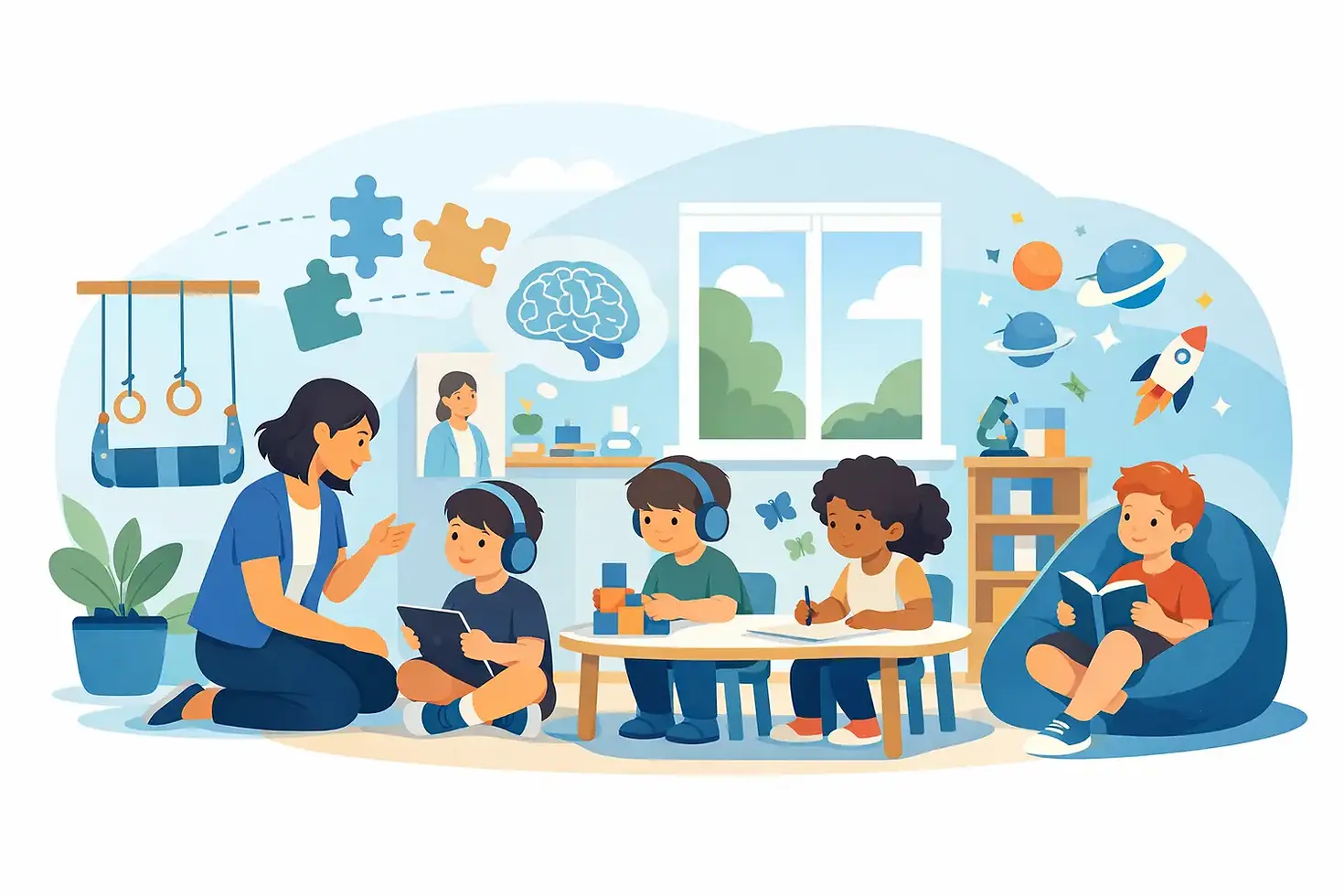
Not every small school is designed for neurodivergent students. That distinction matters. A true microschool for neurodivergent learners is not simply a smaller classroom. It is an intentionally built environment where the school day, teaching methods, sensory expectations, and student support systems are shaped around how students actually learn.
That starts with class size, but it does not end there. Small classes allow adults to notice patterns early - when a student is starting to shut down, when a transition needs more support, when a concept is almost mastered but not quite secure. In a class of eight instead of twenty-eight, there is room for real-time adjustment without making a student feel singled out.
The best microschools also replace generic accommodation with personalized instruction. That means one student may need direct support with executive functioning, while another benefits from explicit social communication practice, and another needs a more advanced academic pace paired with sensory regulation strategies. Neurodivergent learners are not one category. They are individuals, and the school model has to reflect that.
Why traditional schools so often miss the mark
Many parents arrive at this decision after giving conventional school every chance. They have attended meetings, updated plans, advocated for accommodations, and stayed in close contact with teachers. Sometimes those efforts help. Sometimes the system is simply stretched too thin.
Large classrooms create a practical problem. Even strong educators cannot consistently provide individualized support when they are responsible for so many students at once. A child with attention differences may be seen as off-task before anyone asks whether the lesson format is accessible. A student with language-based challenges may understand more than they can express, yet get underestimated because there is not enough time to slow down and decode what is happening.
There is also the issue of emotional safety. Neurodivergent students often spend years receiving the message, directly or indirectly, that they are too much, too sensitive, too distracted, too rigid, or too behind. Even when no one intends harm, a poorly matched environment can chip away at confidence. Academics suffer when a student is in survival mode.
That is why school fit is not a luxury issue. It affects learning, self-concept, and long-term independence.
Small classes matter, but structure matters too
Some families hear "personalized" and worry that it means loose expectations or inconsistent routines. For neurodivergent learners, that would miss the point. Personalization works best when it happens inside a predictable, well-structured school day.
Students often do better when expectations are clear, transitions are supported, and adults respond consistently. Structure reduces cognitive load. It helps students know what is coming, what is expected, and where they can succeed. That predictability can lower anxiety and make it easier to engage with challenging academic work.
This is one of the biggest advantages of a well-designed microschool. It does not ask students to fit into chaos. It creates order that supports growth. The goal is not to lower the bar. The goal is to remove the friction that keeps capable students from showing what they know.
Rigor and support should not be opposites
Families of neurodivergent children are often pushed toward a false choice: protect your child emotionally or challenge them academically. That is the wrong frame.
A student can need speech and language support and still be ready for advanced STEM learning. A child can require sensory accommodations and still be fully capable of high-level reasoning. A teenager can struggle in a conventional classroom and still be on a path toward college courses, industry credentials, or meaningful career preparation.
The right microschool treats support as the foundation for rigor, not an alternative to it. When students feel safe, understood, and appropriately challenged, they are far more likely to persist through difficult tasks, take academic risks, and build genuine confidence. Confidence rooted in real competence lasts longer than praise alone.
For older students, this matters even more. Middle and high school years should not be spent only trying to get through the day. They should also include opportunities to build independence, discover strengths, and prepare for what comes next. In the right setting, neurodivergent learners can access serious academics and future-facing pathways without being asked to navigate an overwhelming environment to get there.
What to look for in a microschool setting
If you are considering this option, the most useful question is not whether a school is small. It is whether the school is intentionally equipped to serve your child.
Look closely at how the school handles student support in practice. Ask how many students are in each class and what happens when a child becomes dysregulated, stuck, or avoidant. Ask whether support is woven into the day or added only after problems escalate. Ask how the school balances individualized instruction with consistent expectations.
You should also ask about academics with the same seriousness. What does rigor look like there? How does the school adapt instruction without watering it down? What opportunities exist for students who are ready for acceleration, enrichment, or career-connected learning?
And pay attention to the emotional tone of the environment. A good fit should feel respectful, calm, and clear. Your child should not need to mask constantly to belong. At the same time, the school should communicate high expectations for growth, responsibility, and participation. Support without standards can feel good in the moment but often leaves students underprepared.
It depends on the child - and on the school
Microschooling is not automatically the right answer for every family. Some students thrive in larger schools with the right team and the right supports. Some families need services or logistics that only a district placement can provide. Cost, location, and scheduling also matter, and those realities are worth naming honestly.
But for many families, the real issue is not whether their child can learn. It is whether the environment is set up in a way that allows that learning to happen consistently. A microschool can be a strong answer when a student needs more individual attention, more relational consistency, more emotional safety, and more flexibility in how support is delivered.
That is especially true for families who are tired of choosing between belonging and achievement. A well-built model can offer both.
At ReThink Microschools, that belief is central: neurodivergent students do not need a watered-down education or endless accommodation without direction. They need a school environment that sees them clearly, teaches them seriously, and supports them skillfully.
The bigger question behind school choice
Most parents are not really asking, "Is this school different?" They are asking, "Will my child be understood here? Will they be safe enough to learn? Will someone notice their strengths, not just their struggles?"
Those questions deserve concrete answers. A microschool for neurodivergent learners can offer them when it is thoughtfully designed around relationship, structure, and high expectations. Not because small automatically means better, but because the right small environment makes it possible to be both responsive and rigorous.
Your child should not have to trade confidence for academics, or support for challenge. The right school should make room for both - and let them grow from there.


Comments