


Personalized K12 Education Options for Families

When your child comes home exhausted from holding it together all day, a school choice stops being an abstract decision. You may be looking for a place where they can learn without being constantly misunderstood, rushed, singled out, or left behind. Personalized K12 education options can offer that possibility, but not every option provides the same level of structure, support, or academic opportunity.
For neurodivergent students, the best fit is rarely about finding an easier school. It is about finding an environment that recognizes how they learn, builds on their strengths, and holds meaningful expectations with the right support in place. Families deserve to know what choices are available and what questions can reveal whether a program is truly prepared to help their child grow.
What Personalized K12 Education Options Should Actually Provide
Personalization is more than a customized worksheet or an accommodation written into a plan. A genuinely personalized school experience starts with knowing the student well: how they process information, communicate, regulate, connect with peers, and respond to challenge.
That knowledge should shape daily instruction. A student who needs clear routines should not have to guess what comes next. A student who thrives through hands-on learning should have meaningful opportunities to apply concepts, not be expected to sit through every lesson in the same format. A student with strong verbal reasoning and slower written output should have ways to demonstrate what they know without lowering the academic bar.
The strongest programs also balance flexibility with consistency. Too much flexibility can leave students feeling uncertain or unanchored. Too much rigidity can create unnecessary stress and prevent real learning. The goal is a structured environment where students know what is expected and adults can adjust support before frustration becomes a crisis.
The Main Educational Paths for Families
There is no single right choice for every child. The right setting depends on a student's needs, family capacity, learning goals, and past school experiences. Still, most families considering a change are weighing a few common paths.
Traditional Public School
Public schools can offer a wide range of courses, extracurricular activities, and formal special education services. For some students, a supportive school team and well-designed accommodations can make a large campus work well.
The challenge is scale. In a crowded classroom, even caring teachers may have limited ability to adapt pacing, communication, sensory supports, or instruction for each learner. Families may also find that accommodations are inconsistently implemented from class to class. When a child needs close relationships, predictable routines, and timely support, a large setting can be difficult to navigate.
Homeschooling
Homeschooling gives families considerable control over schedule, curriculum, pace, and environment. It can be a meaningful reset for a child recovering from school anxiety, burnout, bullying, or repeated misunderstandings. It also allows parents to build learning around a student's interests and developmental needs.
At the same time, homeschooling asks a great deal of families. Parents often become instructor, case manager, organizer, and social coordinator while managing work and home responsibilities. Some students also miss the daily peer relationships, outside accountability, and specialized instruction that a school setting can provide. Homeschooling can be an excellent choice, but it should not be the only alternative when conventional school is not working.
Online School
Virtual learning may reduce social pressure and offer scheduling flexibility. It can work for self-directed students who are comfortable learning through a screen and have consistent adult support at home.
However, online school is not automatically personalized. A digital platform may allow students to work at their own pace while offering little real-time teaching, relationship building, or help with executive functioning. For students who need co-regulation, clear transitions, hands-on instruction, or frequent encouragement, logging in from home can become isolating rather than supportive.
Private Specialty Schools and Microschools
A specialized private school or microschool can provide a middle ground between homeschooling and conventional education. These settings are often built around smaller groups, stronger adult-student relationships, and instructional flexibility without asking parents to carry the full responsibility for their child's education.
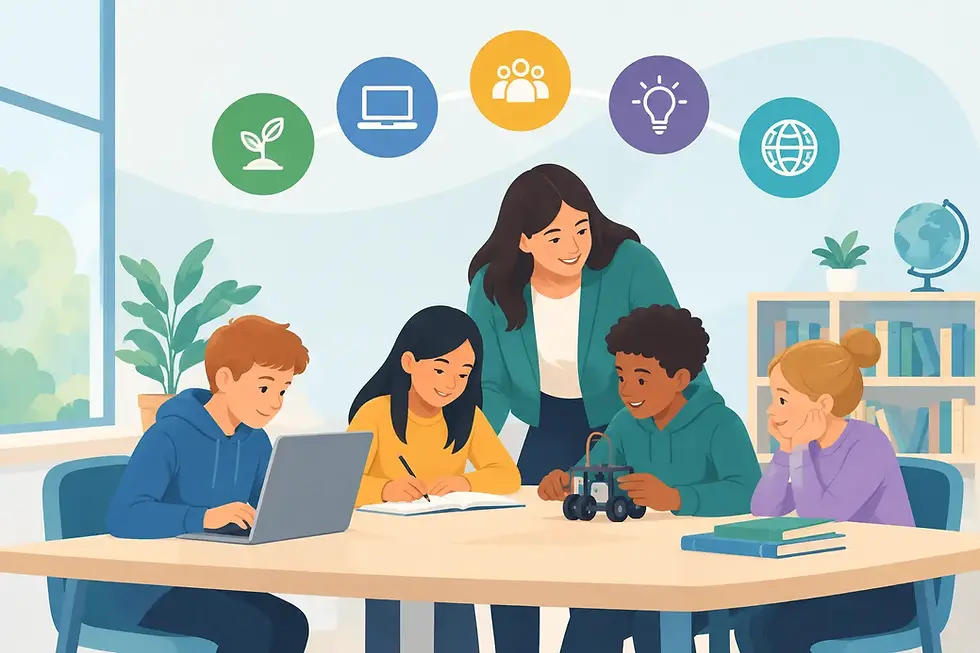
Class size matters because it changes what adults can notice. In a class of eight students, educators can see when a learner is confused before they disengage, recognize a communication difference without misreading it as defiance, and create opportunities for participation that feel safe. Small classes alone are not enough, though. They need to be paired with skilled educators, thoughtful routines, and rigorous instruction.
What to Look for Beyond a Low Student-to-Teacher Ratio
A small class can be a powerful starting point, but parents should look deeper. Ask how the program identifies learning needs, monitors progress, and adjusts instruction. Ask what happens when a student is overwhelmed, misses work, struggles socially, or needs more challenge than the standard lesson provides.
The answers should be specific. “We meet students where they are” sounds encouraging, but families need to understand what that means in practice. Does the school use structured routines? Are educators trained to support communication, attention, sensory, or social-emotional differences? Is there access to related services such as speech support when appropriate? How does the school maintain academic momentum while honoring a student's regulation needs?
A personalized setting should also avoid treating neurodiversity as a problem to fix. Students need adults who understand that differences in attention, communication, sensory processing, and social interaction can coexist with intelligence, creativity, ambition, and deep curiosity. Respectful support does not mean removing all challenge. It means teaching in a way that makes challenge productive rather than defeating.
Academic Rigor Still Belongs in a Personalized School
Many parents worry that a supportive school will not be academically demanding. That concern is understandable, especially when a child has lost ground during difficult school years. But emotional safety and academic rigor are not competing goals. In fact, students are often more able to take intellectual risks when they feel secure, respected, and known.
Rigor should look like meaningful learning, not constant pressure. It includes clear goals, strong instruction, feedback students can use, and opportunities to revisit difficult skills. It also includes work that connects learning to the real world. STEM-focused academics, project-based problem solving, college course access, and career pathways can help students see a future beyond simply getting through the school day.
For older students, personalized planning becomes especially important. One teen may be ready for college-level coursework but need support with organization. Another may be more energized by a career-focused path that leads to a concrete credential. A school should be able to recognize both ambitions and help students build the habits, confidence, and practical skills to pursue them.
Questions to Ask When Comparing Personalized K12 Education Options
A school visit should help you picture your child's ordinary Tuesday, not just its best promotional moment. Notice whether students appear comfortable asking for help, whether transitions are calm, and whether adults speak about students with respect. Ask how the school handles difficult days, because every student has them.
It is also reasonable to ask about curriculum, academic assessment, high school graduation planning, and postsecondary preparation. If your child needs specialized support, ask who provides it and how it is integrated into the school day. Services that exist only on paper will not change a student's experience.
Finally, pay attention to whether the school is curious about your child as a whole person. A strong program will want to know more than a diagnosis or list of accommodations. It will ask about interests, past successes, stressors, communication style, goals, and what helps your child feel capable.
A School Experience Built Around Belonging and Growth
At ReThink Microschools, personalization is designed to be visible in the daily experience: small classes capped at eight students, structured routines, individualized support, and serious academic opportunities. The aim is not to shelter students from the world. It is to give them the foundation to participate in it with greater confidence and independence.
For families, the right school choice can bring relief, but it can also bring something more lasting: the chance to see your child begin to trust their own abilities again. Look for a setting that sees the whole student, expects real growth, and gives them the support to meet that moment.


Comments