

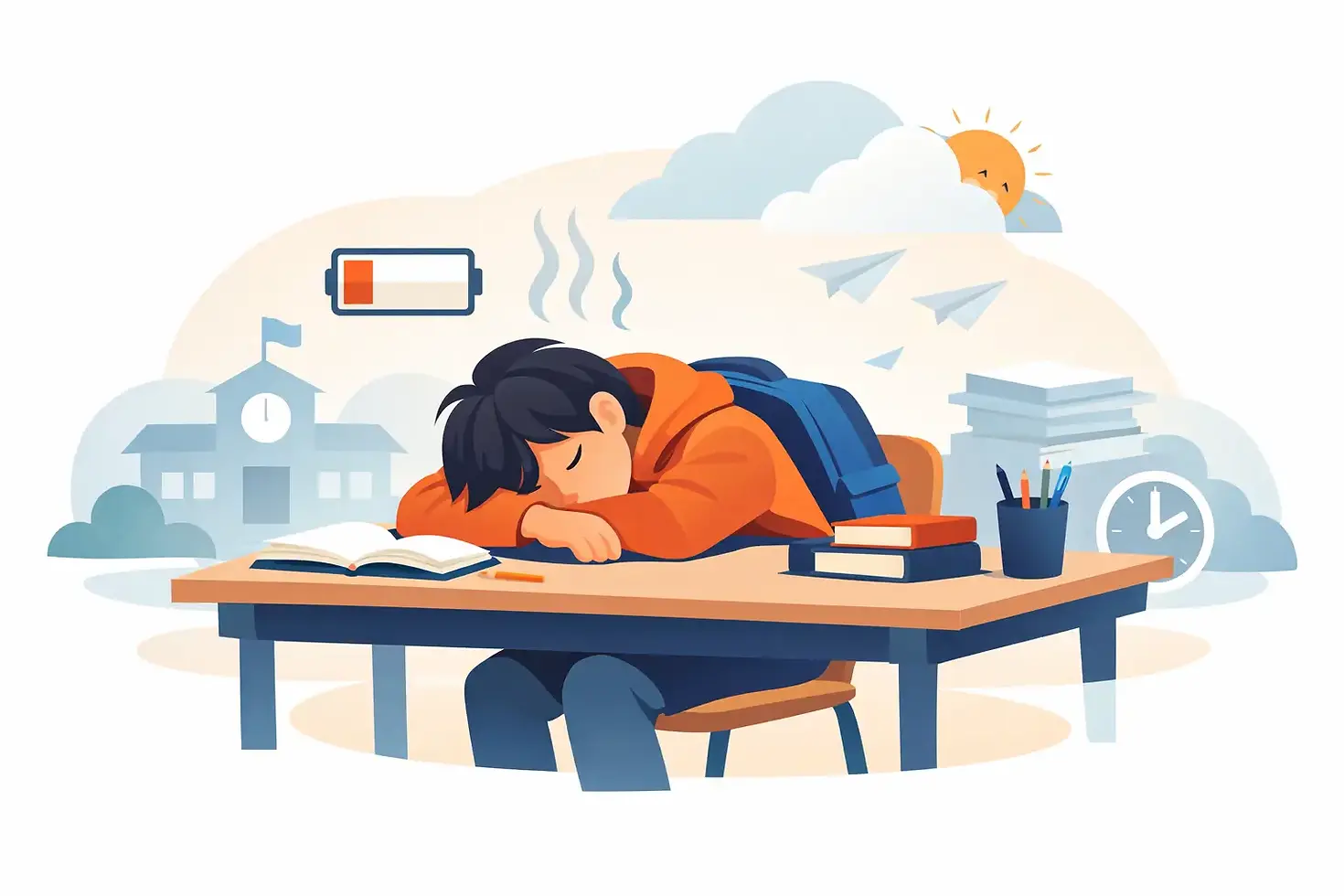
School Burnout: When Your Child Is Running on Empty
- Kaitlin Tomkosky
- Aug 4
- 5 min read

A child who once got dressed without much fuss may suddenly be unable to get out the door. A student who loves science may refuse to open an assignment. By Sunday evening, the tension starts building again. For many families, school burnout does not arrive as one dramatic event. It shows up as a slow loss of energy, confidence, and willingness to engage.
This is especially painful when you know your child is capable. Their struggle is not proof that they do not care about learning or that they lack potential. Often, it is a signal that the demands of their school environment have exceeded the support, recovery time, and sense of safety available to them.
What School Burnout Can Look Like
School burnout is more than an occasional bad day or normal frustration with difficult work. It is a state of emotional, mental, and sometimes physical exhaustion connected to ongoing school demands. A student may feel trapped between expectations they cannot consistently meet and an environment that does not fully understand why those expectations are hard.
The signs are not always obvious. Some students become quiet and withdrawn. Others appear oppositional, irritable, or highly anxious. A child may hold it together all day at school, then melt down at home because they have used every bit of energy trying to cope.
Common signs can include:
Frequent stomachaches, headaches, fatigue, or requests to stay home
Increased anxiety, tears, anger, or shutdowns around schoolwork
Avoiding assignments that once felt manageable
Perfectionism, procrastination, or panic about making mistakes
Falling confidence and comments such as “I’m dumb” or “I can’t do this”
No single sign confirms burnout. Sleep problems, anxiety, learning differences, family stress, and health concerns can overlap. But when these patterns persist and consistently center on school, it is worth looking beyond behavior to the conditions underneath it.
Why Neurodivergent Students May Reach Burnout Faster
Many neurodivergent students spend a great deal of energy navigating demands that other people barely notice. They may be managing sensory noise in a crowded classroom, decoding unclear social expectations, shifting between tasks, organizing materials, masking discomfort, or trying to process directions at the same pace as everyone else.
That effort is real work. A student can be academically bright and still be depleted by the structure around the academics. When adults see only incomplete work, missed deadlines, or school refusal, they can miss the invisible load the student is carrying.
Traditional school settings can intensify that load. Large classes make it harder for teachers to notice early signs of overwhelm. Fast transitions, inconsistent accommodations, public correction, and limited time for connection can leave students feeling exposed rather than supported. Even well-intended interventions may fail if they focus only on compliance instead of asking what is making participation unsustainable.
This does not mean every neurodivergent child needs the same type of school or support. Some thrive in a larger setting with the right team and reliable accommodations. Others need a smaller, more predictable environment before they can reengage with learning. The right fit depends on the student, but the need to be understood is not optional.
School Burnout Is Not a Motivation Problem
When a child is burned out, pressure often makes the situation worse. Repeated lectures about effort, consequences for unfinished work, or promises to “try harder tomorrow” may add shame to an already overloaded student.
High expectations still matter. Students deserve rigorous learning, meaningful feedback, and adults who believe in their future. But rigor without responsive support is not the same as high standards. A student is more likely to persist when expectations are clear, tasks are appropriately scaffolded, and there is a trusted adult who can help them recover after a hard moment.
A useful question is not, “How do we make our child push through?” It is, “What is using up their capacity, and what needs to change so learning feels possible again?” That shift helps families move from blame to problem-solving.
How Parents Can Respond at Home
Start with curiosity. Choose a calm time, not the middle of a rushed morning or a homework standoff. You might say, “I have noticed school seems to be taking a lot out of you. I want to understand what feels hardest.” Some children can answer directly. Others may communicate more easily while drawing, walking, riding in the car, or doing something side by side.
Listen for patterns. Is the hardest part the bus, lunch, group work, a particular class, homework volume, noisy hallways, or the fear of being called on? The answer may be more specific than “school.” Specific information gives you and the school a better place to begin.
At home, protect recovery time where possible. A packed after-school schedule can be difficult for a student who has spent the day masking or managing sensory overload. Rest is not a reward that must be earned after productivity. It is part of what allows a child to return to learning.
It can also help to separate your child’s worth from their current performance. A missed assignment is a problem to solve, not evidence of a character flaw. When children feel safe telling the truth about what they cannot manage, adults can respond before the situation becomes a crisis.
What a Supportive School Response Looks Like
A school should take persistent distress seriously. The goal is not simply to get the student back in the building or caught up on every missed task as quickly as possible. The goal is to rebuild a sustainable relationship with learning.
That begins with communication. Families need a clear picture of what staff are seeing during the day, and staff need to hear what happens before and after school. A collaborative plan may include adjusted workload, predictable check-ins, support with executive functioning, access to a quieter space, or a gradual return after absences. The most effective plan is individualized, monitored, and adjusted as the student’s needs change.
Relationships matter just as much as accommodations. Students are more likely to take an academic risk when they trust that a mistake will not lead to embarrassment or dismissal. In a smaller class, teachers can recognize when a student is becoming overwhelmed, offer support early, and keep expectations consistent without treating every struggle as defiance.
At ReThink Microschools, classes are capped at eight students so educators can know how each learner engages, communicates, and recovers. That kind of personal attention supports both emotional safety and serious academic growth. Students should not have to choose between feeling understood and being challenged.
Rebuilding Confidence Takes Time
Recovery from school burnout is rarely immediate. A student may need time to believe that adults will actually respond differently. They may test new routines, hesitate to participate, or have uneven weeks. Progress can look small at first: getting dressed with less distress, completing one assignment without shutdown, asking for help, or returning to an activity they once enjoyed.
Those moments matter because confidence is built through repeated evidence: “I can do hard things when the conditions are right.” The conditions are not excuses. They are the supports that allow a capable student to show what they know and practice the skills they are still building.
If your child seems to be running on empty, trust what you are seeing. Their distress is communication, and it deserves a thoughtful response. With the right structure, relationships, and expectations, school can become a place where your child has enough room to learn, grow, and feel capable again.


Comments